

Blog
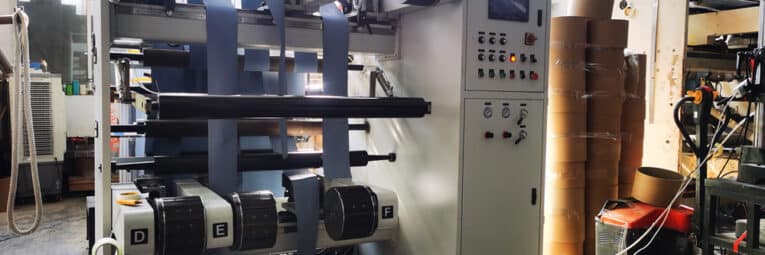
Integrated Slitter Rewinder: Turning Jumbo Rolls into Precise Finished Rolls
In modern manufacturing, the processing of web materials is used in many fields, such as papermaking, packaging, printing, electronics, new energy, and more. Materials like paper, film, metal foil, and nonwoven fabric are usually produced as wide, big rolls (jumbo rolls). But in actual use, they need to be cut into smaller rolls of specific widths, or rewound to meet different process needs. The slitter-rewinder integrated machine is the key piece of equipment for this critical step. It is no longer just a simple “cut big rolls into small rolls” helper machine; it has become a core piece of equipment that drives the whole production process toward higher efficiency, greater precision, and more intelligence.
What is a Integrated Slitter Rewinder Machine?
As the name suggests, a slitter-rewinder combination machine is a piece of processing equipment that integrates two functions—slitting and rewinding—into one machine. Its main job is to take a large mother roll and either rewind it into several finished small rolls of the same width, or slit it into finished small rolls of different widths. In simple terms, it completes the change from “big” to “small” and from “wide” to “narrow.”
In the traditional production process, slitting and rewinding are usually done by separate machines in different steps—first, a slitting machine cuts the wide mother roll into narrow strips, and then the strips are moved to another rewinding machine to be wound into finished small rolls. This method is not only inefficient and has many intermediate steps, but it also easily causes material damage and waste during handling and multiple loading. The slitter-rewinder combination machine combines the two processes into one production line. After slitting, the material goes directly to the rewinding station, saving the time of moving and reloading. According to industry statistics, using an integrated machine can reduce material waste by 30% to 50%, and save more than 50% of floor space.
Besides improving efficiency, the slitter-rewinder combination machine also has an important “quality repair” function—through slitting and rewinding, it can correct layer misalignment and cut out defects created during printing or laminating, greatly improving the surface flatness of the rolls. So it is not just a tool for output, but also a key step for quality assurance.
The slitter-rewinder combination machine is used in a very wide range of applications. From paper, paper tubes, film, and nonwoven fabric, to aluminum foil, copper foil, protective film, tape, thermal transfer ribbon, and even fabric and leather—all of these can be precisely slit and rewound with this machine. It is especially essential in high-end manufacturing fields like flexible packaging, label printing, lithium battery separators, and optical films.
Common Structure of the Slitting Rewinding Machine
A typical slitter-rewinder combination machine, though different brands and models may have small differences, generally follows the core process flow of “unwinding → pulling/tensioning → slitting → rewinding.” Its mechanical structure mainly consists of the following parts.
1) Frame and Base Support
The frame is the “skeleton” of the whole machine. It is usually made of two side plates (left and right) placed opposite each other, built from structural steel and steel plates welded together, to ensure rigidity and stability when running at high speed. All the core parts are mounted on this strong frame.
2) Unwinding Unit
The unwinding unit is at the starting end of the machine. It is responsible for smoothly letting out the large mother roll material. Common unwinding methods include shaft-type unwinding and shaftless unwinding. Shaft-type unwinding uses a through-shaft and an inflatable chuck that expands when air is pumped in to hold the core of the mother roll. Shaftless unwinding uses clamping mechanisms at both ends to grip the mother roll from the sides. The unwinding unit usually has a magnetic powder brake or a servo motor to control unwinding tension, and it also has an edge position controller (EPC) to detect and correct any sideways movement of the material in real time. Loading is becoming more and more automated; many machines use pneumatic or hydraulic swing arms for automatic loading, greatly reducing manual labor.
3) Pulling Roll and Guide Roll System
After the material comes out of the unwinding unit, it passes through a series of guide rolls and pulling rolls to smoothly enter the slitting area. The pulling system usually has several pulling rolls; some use a large “S”-shaped wrap design to increase the contact area between the material and the roll surface, ensuring stable pulling force. This area also includes important parts such as spreader rolls (to remove wrinkles) and tension-sensing rolls (to measure tension in real time). The surface treatment of the guide rolls is also important—for surface-sensitive materials, ceramic-coated or silicone guide rolls are often used to reduce the risk of scratching.
4) Slitting Unit
The slitting unit is one of the core functional parts of the whole machine. It determines the width accuracy and cut quality of the finished rolls. The choice of slitting blade type directly affects the processing result. Razor blades are suitable for thinner paper and film materials—they cost less but wear out quickly. Circular knives are good for high-speed film slitting; they last long but need regular sharpening. Modern high-end slitter-rewinder combination machines commonly use servo motors to drive the blade holders. After the operator enters the parameters through the human-machine interface (HMI), the blade holders can move automatically, quickly, and accurately to the set positions, with positioning accuracy up to ±0.1mm or even better—achieving “one-touch product changeover.” The slitting blade shafts are often mounted on small carts, so you can prepare blade sets for different slitting widths in advance and just push them into place when needed, avoiding the trouble of frequent blade adjustment.
5) Rewinding Unit
The narrow strips after slitting are guided by guide rolls and finally wound into finished small rolls on the rewinding unit. The rewinding unit is another core part of the machine. Common configurations include single-station rewinding and dual-station rewinding. A dual-station rewinding system allows one set of rewind shafts to work while the other set is pre-loaded with new paper cores. When slitting is complete, it automatically switches over, achieving “zero-stop” roll change and greatly improving production efficiency. The rewind shaft is usually an air-expanding shaft—when air is pumped in, the shaft diameter expands to firmly hold the core. As the rewind diameter increases, the rewinding tension needs to be adjusted dynamically to prevent the inner layers from being crushed or the outer layers from being too loose. The rewind pressure roller, controlled by pneumatic or hydraulic systems, applies proper pressure to the material being wound, ensuring tight winding and neat edges.
6) Control System
The brain of a modern slitter-rewinder combination machine is the control system made of a PLC (Programmable Logic Controller) and a touchscreen. The operator can preset different process parameters (tension curves, slitting widths, running speed, etc.) for different products on the touchscreen and save them as recipes. When switching products, the operator just calls up the recipe with one touch, and all parameters are set automatically. High-end machines also have IIoT (Industrial Internet of Things) functions, which can collect real-time data on machine status, output, energy use, and more, enabling remote monitoring and predictive maintenance.
Tension Control During Cutting Process
If the slitting unit and rewinding unit are the “arms and legs” of the slitter-rewinder combination machine, then the tension control system is its “nervous system”—you cannot see it or touch it, but it decides the final quality of the product. Tension is the stretching force acting on the web material. During slitting and rewinding, the material is always moving from unwinding to rewinding. If the tension is too high, the material may stretch or even break. If the tension is too low, the material becomes loose, wrinkles appear, and after rewinding, the roll may be loose and have uneven edges. This is especially true for stretch-sensitive materials like film and aluminum foil—tension control accuracy directly affects the product pass rate.
The main goal of tension control is to keep the tension constant or change it according to a set pattern. However, achieving this goal is not easy. As the unwinding diameter keeps decreasing and the rewinding diameter keeps increasing, the line speed and rotational inertia are constantly changing, causing tension to fluctuate. So tension control is essentially a dynamic, nonlinear control problem.
Main Methods of Tension Control
Traditional tension control often uses magnetic powder brakes or magnetic powder clutches. By adjusting the excitation current of the magnetic powder, the braking torque is controlled, and thus the tension is adjusted. This method is simple in structure, but it responds slowly, and the magnetic powder ages over time, leading to high maintenance costs. Modern slitter-rewinder combination machines generally use closed-loop tension control systems. The basic setup includes three main parts: a tension detector, a tension controller, and a tension actuator. The tension detector (usually a tension sensor or dancer roll) measures the actual tension of the material in real time and sends feedback to the controller. The controller compares the actual value with the set value, calculates the error, and outputs a control signal. The actuator (such as a servo motor or inverter) adjusts the driving torque of unwinding or rewinding according to the control signal, thus keeping the tension stable within the set range. This closed-loop control can keep tension fluctuation within ±1%, meeting the high-precision requirements of applications like lithium battery separators.
In terms of control strategy, sectional tension control is the industry standard. The equipment usually divides the whole process into three sections: unwinding section, pulling section, and rewinding section, with each section having independent tension control. The unwinding section mainly controls the torque of the unwinding brake or motor to prevent the material from being overstretched before entering the slitting area. The pulling section uses the line speed of the pulling rolls to provide stable material feeding for slitting. The rewinding section adjusts the rewinding torque dynamically based on changes in roll diameter.
There is a special feature in rewinding tension control—taper tension control. As the rewinding diameter increases, if the tension is kept constant, the inner layers will be subjected to greater and greater compressive stress, which may cause inner-layer deformation or “bulging.” Therefore, in the later stage of rewinding, the tension should be reduced appropriately, so that the tension decreases in a taper as the diameter increases. This “tight inside, loose outside” control strategy effectively ensures the overall quality of the finished rolls.
In recent years, tension control technology has been moving toward higher accuracy and greater intelligence. The spread of servo drive technology has greatly improved the response speed and accuracy of tension control. The PID (Proportional-Integral-Derivative) control algorithm is widely used, and some high-end machines even use advanced control theories like genetic algorithms and active disturbance rejection control. The pneumatic unwinding constant tension control and rewinding taper tension control systems used by LiPu Machinery have also been widely applied in various scenarios, offering simple and reliable structure and easy operation, replacing traditional magnetic powder brake control. It is foreseeable that with the further development of smart manufacturing and the Industrial Internet, the tension control of slitter-rewinder combination machines will become even more precise, intelligent, and adaptive.
The slitting rewinding integrated machine has evolved from a simple “slitting + rewinding” combined equipment into a modern piece of equipment that integrates precision mechanics, automatic control, and intelligent inspection. It has witnessed the journey of manufacturing from rough to lean. Understanding its definition, mastering its structure, and thoroughly grasping its tension control technology not only helps with proper machine selection and efficient use, but also means grasping the core of modern web processing technology. As new materials and new processes keep emerging, the slitter rewinder integrated machine will surely play an even more irreplaceable role in more fields.
Recent Posts
-
 Integrated Slitter Rewinder... November 20, 2024
 -
 Market Status of Used Slitt... October 24, 2024
 -
 Applications of Electronic ... October 23, 2024
 -
 Overview of UHMWPE Separato... September 20, 2024
 -
 Overview of PVC Slitter Rew... July 2, 2024
Contact Info

Xiongzhou Street, Liuhe District, Nanjing City, 211511, China
Phone: 86 025 86555699Email: info@film-slitter.com
Recent Posts
-
Integrated Slitter Rewinder... November 20, 2024
-
Market Status of Used Slitt... October 24, 2024
-
Applications of Electronic ... October 23, 2024
-
Overview of UHMWPE Separato... September 20, 2024
-
Overview of PVC Slitter Rew... July 2, 2024