

Blog
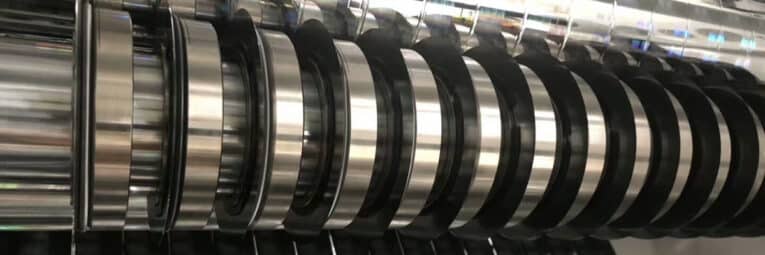
Market Status of Used Slitting Rewinding Machines
Against the backdrop of continued growth in light industries such as packaging, electronics, and adhesive products, small and medium-sized manufacturers are seeing rising demand for production equipment. As a core machine that cuts large parent rolls into finished rolls of specific widths, a brand-new slitting rewinding machine often costs hundreds of thousands or even millions of yuan, which deters many companies with tight budgets. In comparison, used slitting machines have three main advantages: “price is usually 30% to 50% of a new machine, no waiting for production lead time, and less loss from resale since heavy depreciation has already passed.” As a result, they have become a mainstream choice for small factories in trial production, mass production, and flexible manufacturing. However, beneath the surface, there are also risks. Since 2026, industry requirements for overall accuracy, running stability, equipment condition, and maintenance services have kept rising, but service providers vary widely in quality. Some small dealers still have issues such as substandard refurbishment, unclear specifications, and no after-sales support.
Types of Used Slitting Machines
Used slitting machines come in many types, and classification depends on application, winding structure, slitting method, and automation level. Buyers need to match the machine to their own production needs.
1) By application. This is the most straightforward classification in the market. Film slitting machines are specially used for cutting plastic films like BOPP, PET, and PE, and are core equipment in the tape and packaging film industries. Paper slitting machines serve the printing and papermaking industries. Nonwoven slitting machines are used in hygiene materials, filter materials, and related fields. There are also machines for metal foil, tape, labels, and other materials. Different applications have very different requirements for precision, speed, and tension control, so buyers must first clarify what materials they will process.
2) By winding structure. For common film slitting machines, there are generally four structural types: two-shaft center-winding slitting machines, two-shaft surface-winding slitting machines, gantry-type turret slitting machines, and gantry center-surface winding slitting machines. The first three are more widely used. Center winding is suitable for materials that need a hard core, while surface winding works better for soft, easily stretchable films.
3) By slitting method. This includes razor blade slitting, crush-cut slitting, and shear-cut slitting. Razor blade slitting cuts like a razor blade coming straight down. Shear-cut slitting uses upper and lower circular blades to cut the material from the tangential direction. Shear-cut slitting can be further divided into tangential and non-tangential types. Tangential shear-cut slitting is easy to set up and adjust, but the material may drift at the cut point. Each method has pros and cons, so the choice depends on the material’s properties.
By automation level. Machines can be manual, semi-automatic, or fully automatic. Fully automatic slitting machines come with PLC control, automatic tension adjustment, and automatic guiding, offering high efficiency and good precision, but their used prices are also higher. Manual and semi-automatic models are better for companies with tighter budgets and smaller production scales.
Prices of Used Film Slitting Machines
The price range for used film slitting machines is extremely wide, from a few thousand yuan to several million yuan, affected by brand, model, age, condition, technical parameters, and market supply and demand. Generally, the price of a used film slitting machine is about 30% to 50% of a new one of the same model. But lower price is not always better—machines priced far below the market average often hide major faults or poor refurbishment. Buyers should weigh price against quality carefully.
1) Entry-level price range (thousands to tens of thousands of yuan). The most basic or older used machines are relatively cheap. For example, a used film slitting machine with 1900mm width in normal working condition may be quoted at about 12,000 yuan. Ordinary used slitting machines generally sell for a few thousand to tens of thousands of yuan. These are usually suitable for small workshops, startups, or production with low precision requirements.
2) Mid-range price (tens of thousands to hundreds of thousands of yuan). This range covers most used machines in good condition from well-known brands. For example, a multi-functional plastic film slitter rewinder may cost about 200,000 to 300,000 yuan. Mid-range equipment usually has decent automation and cutting precision, meeting the daily production needs of medium-sized factories.
3) High-end price range (hundreds of thousands to millions of yuan). Imported brands, high-precision, and large models are the most expensive. For example, a used German Kampf slitting machine may have a minimum transfer price of several million yuan. Although expensive, such machines often have better accuracy and stability than new mid-range domestic machines, which is attractive to companies needing high-precision slitting.
Key Points to Consider When Buying a Used Film Slitting Machine
Buying used equipment may seem to save money, but if the decision is wrong—unstable operation causing frequent downtime, lower precision hurting yield, and no after-sales support—the “money-saving” purchase can become a “cost black hole” that hurts production efficiency and order delivery. Therefore, buyers should pay special attention to the following areas.
(1) Equipment Condition and Core Component Inspection
This is the foundation for evaluating a used machine’s value. First, check the machine’s age—the typical service life of a slitting machine is 8 to 15 years, and machines over 10 years need extra caution. Second, find out its historical workload—whether it was run continuously at high load for 24 hours. Core component inspection is critical: for the cutting carriage and blades, check whether the blade shaft is bent and the blade wear level; for the drive system, check belts and gears for cracks or looseness, and test the servo motor or frequency converter by powering it on to see if there is abnormal noise or overheating; for the electrical system, open the control cabinet to check wiring aging and PLC module condition; rollers should be free of dents and rust, and tension sensors should be responsive and reliable. On-site trial run is a must—preferably with your own material for actual load testing. Check cutting accuracy (generally within ±0.1mm) and waste edge rate (generally no more than 3%).
(2) Matching Technical Parameters with Production Needs
Equipment parameters must match your own production requirements precisely. Key parameters include: maximum cutting width (must match the parent roll width), cutting speed range (affects productivity), rewinding diameter (determines output per roll), and compatible material thickness range (whether it handles your materials). Too high parameters waste resources, while too low parameters cannot meet production needs. Note especially that used machines often run slower than new models, so compare capacity requirements. Also check whether the control system and mechanical structure can meet current demands for high efficiency and precision.
(3) Supplier Selection and After-Sales Support
A reliable supplier is the “insurance” for a used machine transaction. It is better to choose a professional equipment service provider with its own workshop and technical team, rather than a pure broker or individual seller. When evaluating a supplier, check: whether they have deep experience in this field, whether they can provide clear equipment history and maintenance records, whether they have technical debugging and repair capabilities, and whether they can offer limited warranty or technical support afterward. Professional suppliers usually perform systematic in-depth inspections on the machines they sell—including mechanical structure checks, electrical control system calibration, and functional trial runs. In contrast, the “one-shot deal” model is very risky: once the machine breaks down, there is no original manufacturer support, and the used dealer lacks a professional technical team and spare parts inventory, leading to long repair times and uncontrollable costs.
(4) Common Traps and Risk Prevention
Buying used equipment requires vigilance against several traps. First, “refurbished machines disguised as used”—using paint to hide rust and replacing parts with low-quality components to fake good condition. Second, “hidden faults”—sellers may run the machine briefly to cover deeper problems, so request a cold-start test. Third, “obsolete models”—key spare parts for older models, such as specific PLCs, may be hard to find, so check market availability in advance. Fourth, “paying a deposit without seeing the item”—very risky, especially if the seller is not properly identified. The best prevention is to confirm the model, whether the equipment is still available, and the ownership status before viewing, and always insist on on-site inspection and trial run.
At present, the used slitting machine market is moving toward better regulation. With continued expansion in downstream industries such as packaging, electronics, and adhesive products, demand for used slitting equipment is growing steadily. However, behind the market prosperity, there are also hidden issues like opaque information and uneven quality. For buyers, it is important to recognize both the advantages—”high cost-performance and quick startup”—and the risks—”unknown condition and no after-sales guarantee.” In the decision-making process, follow the principle of “inspect first, test-run second, transact last.” From choosing the right machine type, evaluating price, to making the final purchase, every step should be carefully assessed and rationally decided, so that cost reduction and efficiency improvement can truly be achieved.
Recent Posts
-
 Integrated Slitter Rewinder... November 20, 2024
 -
 Market Status of Used Slitt... October 24, 2024
 -
 Applications of Electronic ... October 23, 2024
 -
 Overview of UHMWPE Separato... September 20, 2024
 -
 Overview of PVC Slitter Rew... July 2, 2024
Contact Info

Xiongzhou Street, Liuhe District, Nanjing City, 211511, China
Phone: 86 025 86555699Email: info@film-slitter.com
Recent Posts
-
Integrated Slitter Rewinder... November 20, 2024
-
Market Status of Used Slitt... October 24, 2024
-
Applications of Electronic ... October 23, 2024
-
Overview of UHMWPE Separato... September 20, 2024
-
Overview of PVC Slitter Rew... July 2, 2024